Milton Keynes, England · Parish council
Whitehouse residents pin where the dog bins should go
Whitehouse, a new estate on the western edge of Milton Keynes, has outgrown its dog bins. The community council asked residents to drop a pin where a bin was missing. 39 did so in nine days, and the council's next paper recommended six new bins.
 Whitehouse Community CouncilDog-bin provision survey, Councillor Julian Thomas
Case study · October 2026
Whitehouse Community CouncilDog-bin provision survey, Councillor Julian Thomas
Case study · October 2026
An estate that outgrew its bins
Whitehouse is one of the new neighbourhoods on the western edge of Milton Keynes, still being built out between the old Watling Street and the open fields beyond Calverton Lane. Whitehouse Community Council looks after the parish, and among the things it provides are the dog-waste bins: fourteen of them, most installed when the estate was much smaller.
The goal
Two years after its last review, with new streets added every year, the council had a dog-bin budget for 2026/27 and one question to answer before spending it: where are bins missing? Not as seen from the council office, but as felt by the people who walk the dogs every day. The council wanted a short list of locations it could check against land ownership, access for emptying and the cost of collection, and take to a council meeting.
So instead of guessing, it put a map in front of residents.
In the council's own words
The survey closes with the council's explanation of what happens to a suggestion:
Whitehouse has grown considerably since many of our existing dog-waste bins were installed. We're reviewing whether additional bins are needed and where they would provide the greatest benefit. Your suggestion will be considered alongside responses from other residents and practical factors such as land ownership, accessibility, installation costs and collection arrangements.
From the dog-bin survey's closing page
The survey
Two pages, built in an afternoon. The first is the map: the fourteen existing bins drawn as blue dots, and one task for the resident, to drop a single pin where an additional bin would be useful, then, in a pop-up on the pin, tick why (a popular dog-walking route, too far from an existing bin, dog fouling is a problem here, near a park) and add a comment if they wish. The second page asks who is answering. That is all, and it took residents a median of a minute and a half.
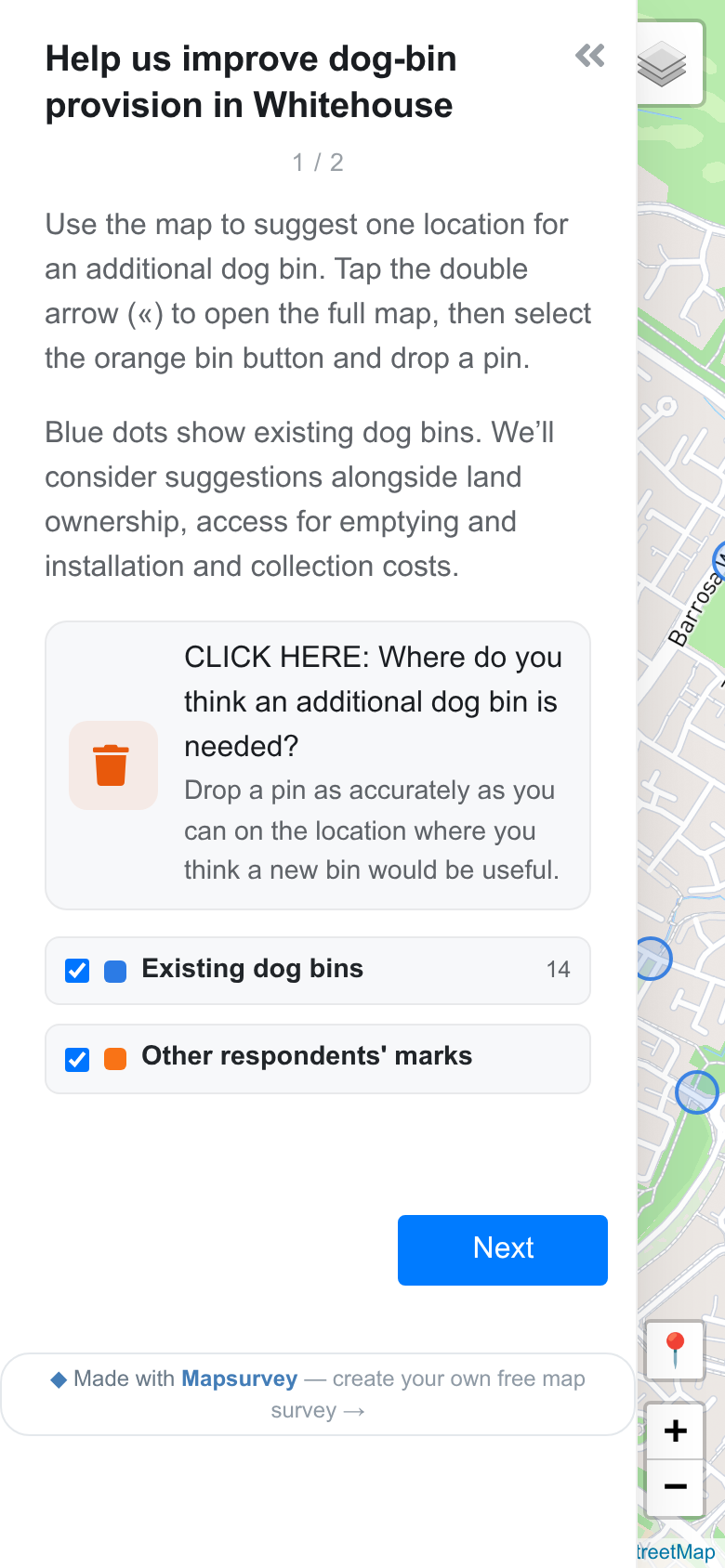
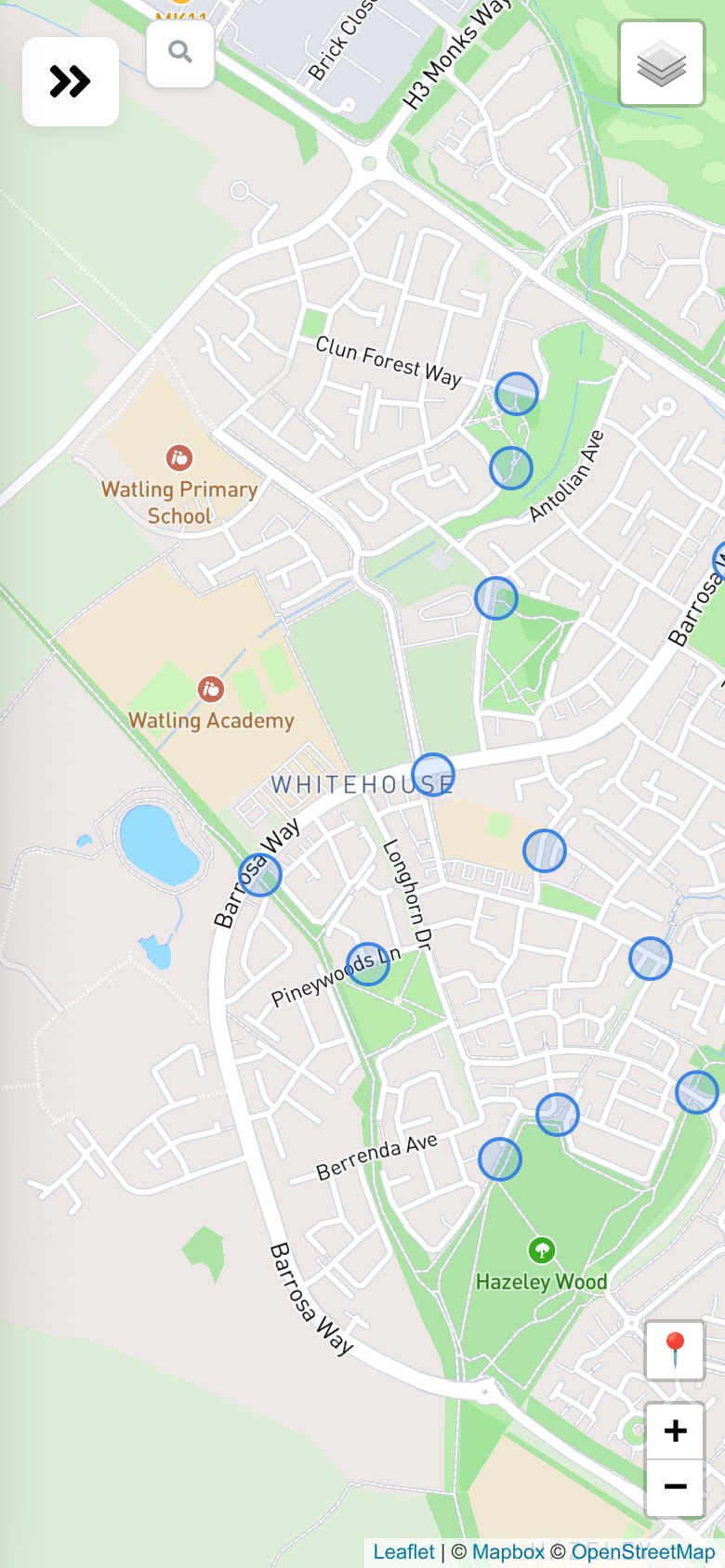
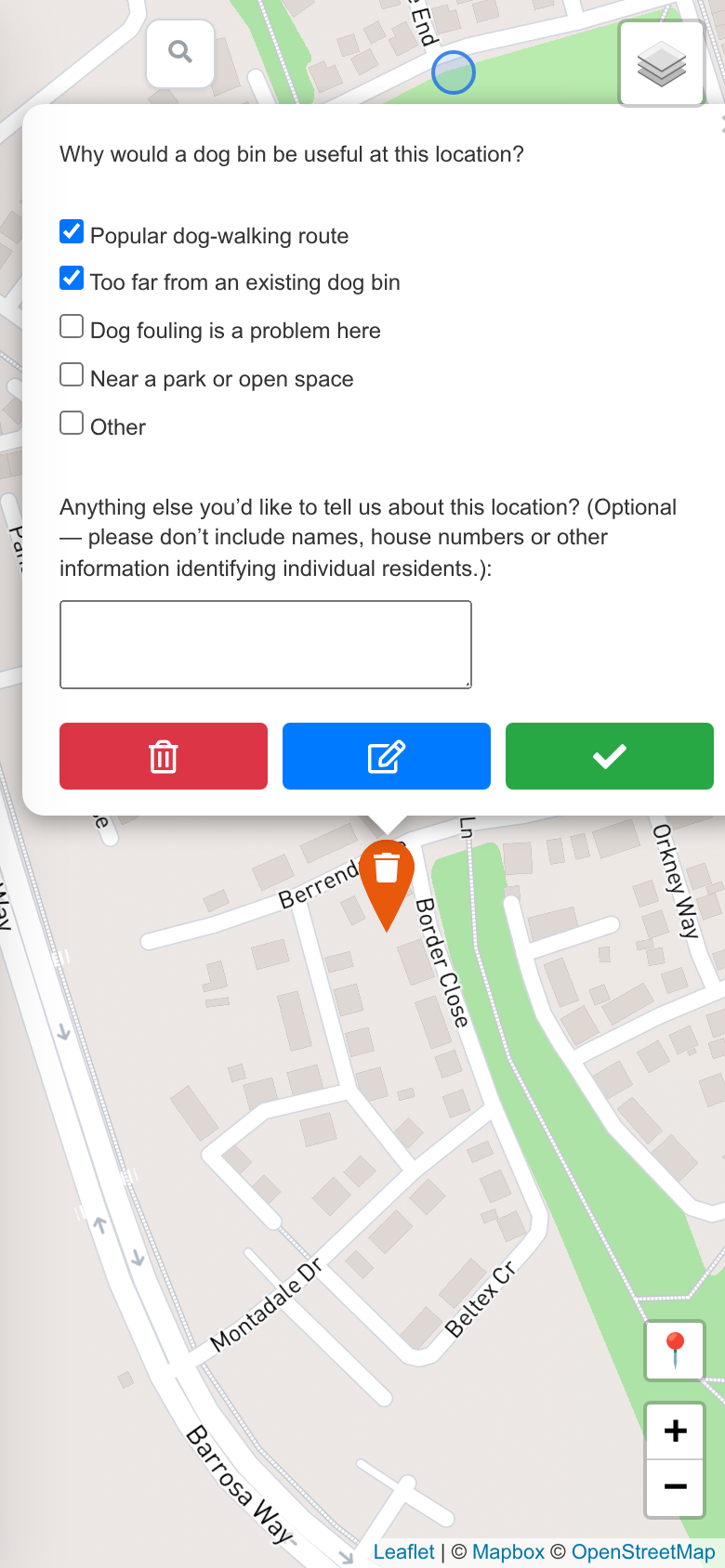
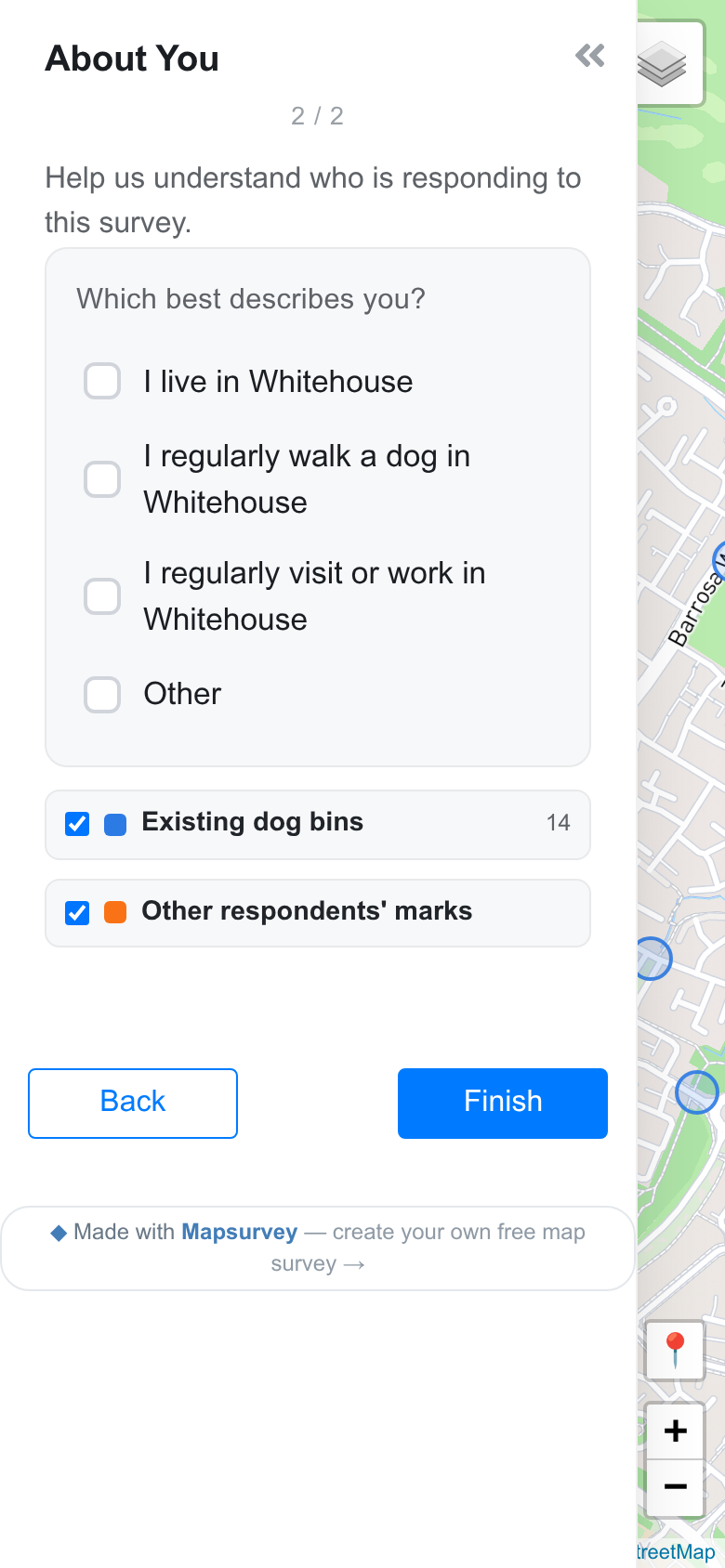
The council posted the link on its website and on its Facebook page on 2 September 2026. Most of the answers arrived that same afternoon.
What came back
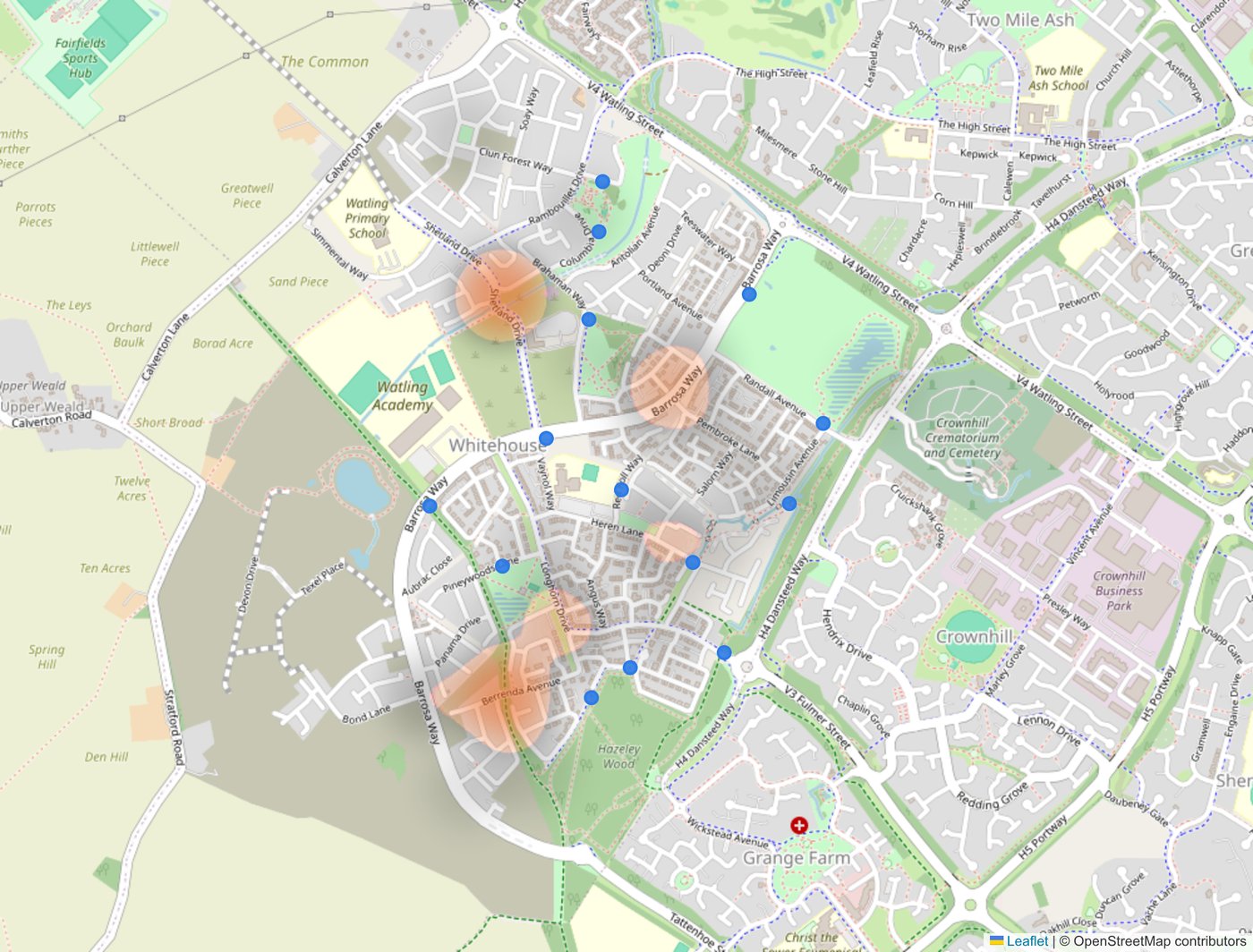
In nine days 39 residents answered and 37 of them placed a pin; 38 of the 39 did it on a phone. The pins cluster: the entries to the green corridor through the middle of the estate and the footpaths out to the woods come up again and again, with the same reason attached, a popular walking route with no bin within a few minutes' walk.
I have to say, I am very impressed with the tool. It's intuitive, and has been very well-received.
Councillor Julian Thomas, Whitehouse Community Council
What the council did with it
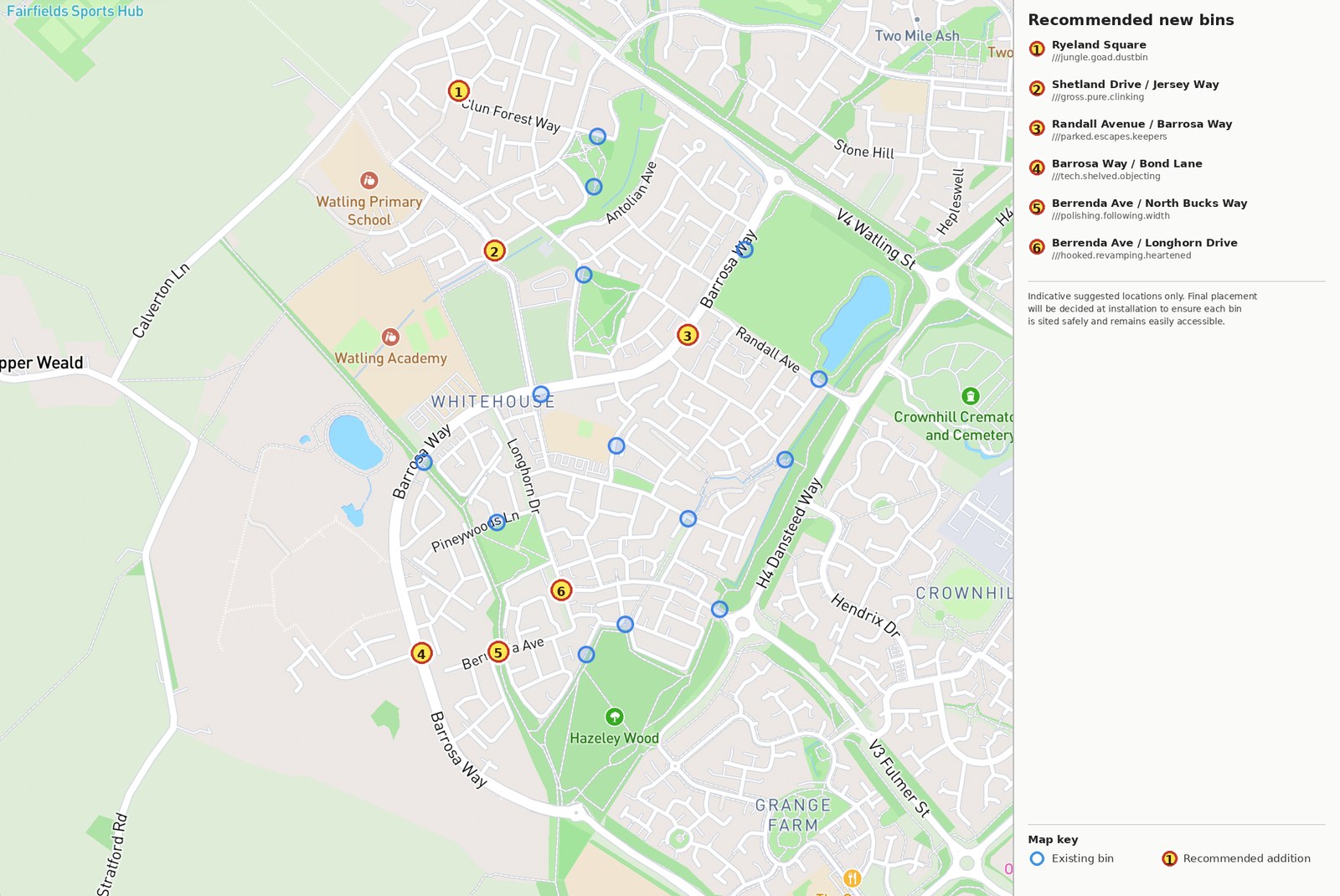
Within the month the council had a paper in front of it: 37 suggested locations, reviewed against the existing network and the main walking routes, and a recommendation to buy and install six additional bins, concentrated along the green corridor and at the entrances to the woods, with final siting left to the council's warden. The whole proposal fits inside the year's existing dog-bin budget. The map at the top of this page is the council's own: the fourteen existing bins and the six it recommends adding.
What's next
The council is already planning its next map survey, on where winter grit bins should go. One thing Councillor Thomas asked for after the first survey, letting residents support a pin that someone else has already placed instead of adding a duplicate, is now part of every Mapsurvey map survey.
Planning a count, a consultation or a survey like this one?
Draw your zones, write your questions and share one link. Free to start.
Create your map survey